Atlanta’s Neighborhoods Ranked From WORST to BEST
The 6 Best In-Town Atlanta Neighborhoods, Ranked: Where Does Your Budget Fit in 2026?
One in-town Atlanta neighborhood starts in the low $300,000s. Another runs past $1.5 million. If you’re planning a move and trying to figure out where you actually fit — budget, lifestyle, and day-to-day access — this breakdown is built for you. After 28 years and over 500 homes sold in intown Atlanta, these are the six in-town neighborhoods I’d recommend, ranked from most specialized to most well-rounded.
#6: Atlantic Station — Convenient, But Not a Traditional Neighborhood
Atlantic Station was built from scratch on the former Atlantic Steel mill site — a planned, mixed-use development designed to put retail, dining, office, and residential in one walkable zone. And it delivers on that promise. You can walk to Georgia Tech, skip the car entirely, and have a restaurant patio outside your door on any given weekend.
But here’s the honest trade-off: you’re living inside a shopping district. The energy is commercial, there’s constant foot traffic, and there’s no private outdoor space. Everything green is communal. Housing options are limited to condos and townhomes — no single-family homes exist here.
Median price: Low $500,000s (as of February 2026)
Best for: Georgia Tech faculty, grad students, buyers who want zero car dependency
Watch out for: Lack of neighborhood identity, no private yards
#5: The West Side — Atlanta’s Most Active New Development Zone
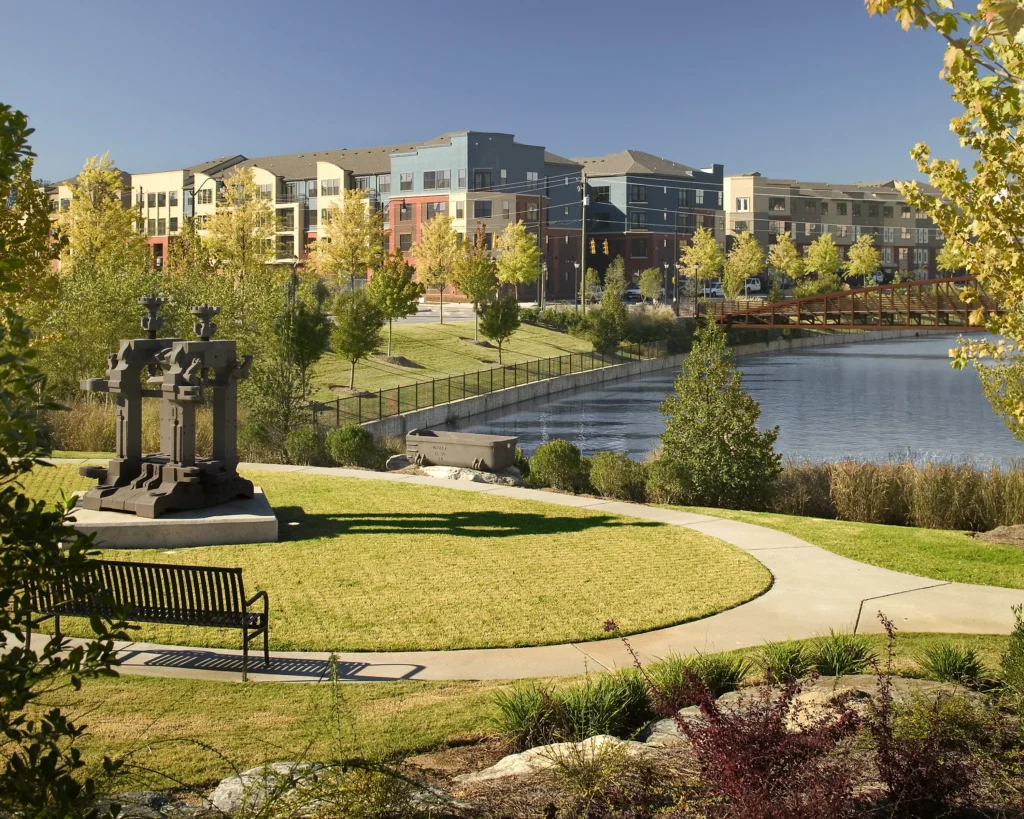
The West Side (distinct from West Midtown — a difference that matters) is where most of Atlanta’s new in-town construction is happening right now. It’s modern, social, and packed with amenities: breweries, Topgolf, the Atlanta Pickleball Club, and West Side Reservoir Park — the former Bellwood Quarry turned green space, now connected to the BeltLine Trail.
The real limitation is geography. Getting from the West Side to the East Side during the day can push close to 45 minutes. Most housing here is newer townhomes, not historic Craftsman homes.
Median price: Mid $300,000s
Best for: Midtown workers, buyers who want low-maintenance, move-in-ready living
Watch out for: East Side access, limited neighborhood history
#4: Old Fourth Ward — BeltLine Access at Its Most Immediate
Old Fourth Ward is defined by two anchors: direct BeltLine access and Ponce City Market. The Market alone — a 2.1-million-square-foot mixed-use development converted from a Sears distribution center — contains a food hall, residences, offices, retail, and a rooftop amusement park. Step onto the BeltLine on a Saturday morning and within 10 minutes you’re surrounded by patios, coffee shops, and activity every day of the week.
Pricing reflects that access. You’re looking at mid-$400,000s to well over $1 million depending on the property. The weekend crowds near Ponce City Market can be intense, and competitive inventory keeps prices elevated.
Price range: Mid $400,000s – $1M+
Best for: Buyers who prioritize walkability and energy above all else
Watch out for: Weekend congestion, competitive market
#3: Kirkwood — The In-Town Neighborhood Most People Haven’t Discovered Yet
Kirkwood is one of Atlanta’s best-kept secrets, and that’s genuinely part of its value. Established along an old trolley line in the late 1800s, it’s the last true in-town neighborhood before Decatur — and its size gives it something rare in this market: range.
Kirkwood Village is a real Main Street. There’s a butcher, multiple restaurants, a police station, and a neighborhood association that runs events like the Spring Fling Festival in May. The community feel isn’t manufactured.
Pricing:
- Condos from the high $200,000s
- Townhomes in the high $400s – low $500s
- Single-family homes: median mid $700,000s
Best for: Buyers priced out of other in-town areas, families, community-focused buyers
Watch out for: Car dependency, I-20 as your main highway artery
#2: Grant Park — Preserved Victorian Architecture, Airport Access, and BeltLine Upside
Grant Park is one of Atlanta’s oldest intact residential neighborhoods, and you feel it immediately. The Victorian homes here — many dating to the late 1800s — have been meticulously maintained. In a city that tears things down and rebuilds constantly, that kind of preservation is rare and valuable.
The neighborhood centers around Grant Park itself (home to Zoo Atlanta), with Oakland Cemetery — the most historic in the city — on the north side. The Summer Shade Festival in August and candlelit holiday home tours reflect a deeply involved community.
Practical advantage most buyers miss: you’re about 10 minutes from downtown and 15 minutes from Hartsfield-Jackson. For frequent travelers, that access compounds over time. The Southside BeltLine Trail runs adjacent — still developing, but the same pattern of value growth seen in Old 4th Ward and Inman Park is something to watch here.
Price range: High $500,000s – low $600,000s (fully restored homes push higher)
Best for: History lovers, families, frequent flyers, buyers looking for long-term appreciation
Watch out for: Some streets still developing, Southside Trail not yet fully built out
#1: Inman Park — Atlanta’s First Planned Neighborhood, and Still the Best
Inman Park was developed in the late 1880s as Atlanta’s first planned residential suburb — and because it was planned from the start, it has features other neighborhoods had to retrofit. Curved streets that naturally slow traffic. Large lots. A tree canopy that feels intentional. Victorian, Queen Anne, and Craftsman homes that are mostly well-restored and actively protected by a neighborhood association that takes preservation seriously.
In 28 years, this is the easiest recommendation I make. Here’s why: you get direct BeltLine access, walkable distance to Little 5 Points, MARTA access, and a neighborhood culture built around community investment. The Inman Park Festival each April — three days, volunteer-run, with a historic home tour — tells you everything about how invested residents are.
The only real trade-off: price. Homes typically range from the mid $800,000s to well over $1.5 million. Demand is strong and supply is limited, and BeltLine access has only increased competition.
Price range: Mid $800,000s – $1.5M+
Best for: Buyers who want the full package — history, walkability, architecture, community, and access — and have the budget for it
The ranking matters a lot less than the fit. Every one of these neighborhoods is the right answer for someone — and the wrong one for someone else. If you’re at the point where you want to know which in-town area actually lines up with your budget and timing, reach out directly at hello@vcgrealty.com. We’ll walk you through what’s available right now and which specific blocks are worth your attention.
Methodology & Sources
Data source: ChartMaster Services, LLC Monthly Market Overview (MMO) Reports for the Atlanta Metro 8-County Area, covering Single-Family Detached and Condo/Townhome residences.
Key definitions: Median S/OLP = median closing price as % of original list price; DOM = days on market; MOS = months of supply (active inventory ÷ average monthly sales); % Price Reduced = share of closed listings that had at least one price reduction; % Failed = expired, canceled, or withdrawn listings.