New Developments in Atlanta 2026–2027: A Buyer’s Timeline
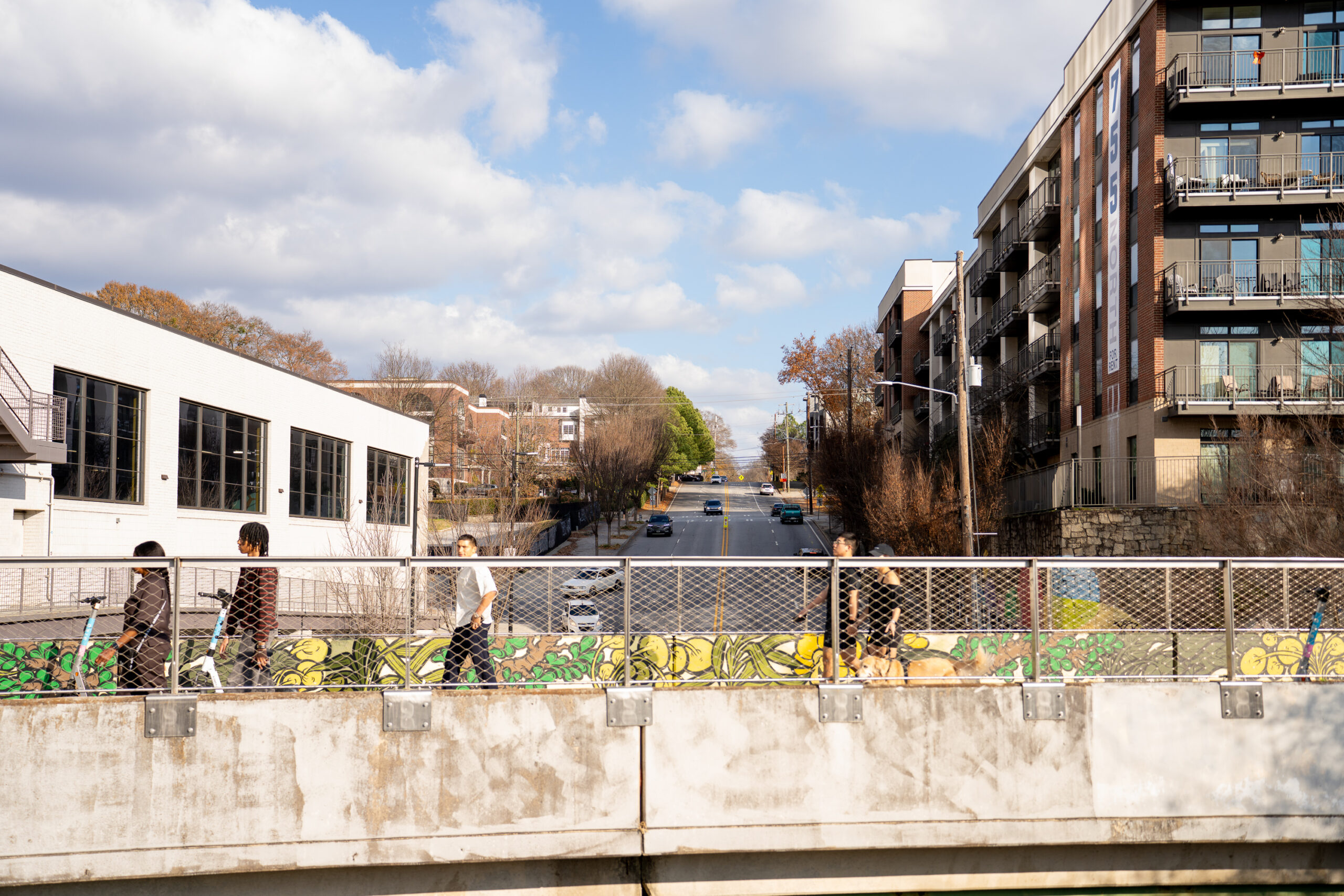
New developments in Atlanta are spread across at least six corridors — downtown, the Beltline, the west side, Peoplestown, and Avondale Estates — and almost none of them finish at the same time. Enota Park targets fall 2026, the Northwest Trail’s first new section mid-to-late 2027, the Peoplestown park December 2027, and the Oakland City Beltline connector mid-2028. A Georgia Tech study found Beltline-adjacent homes outperformed by 17.9% to 26.6% from 2011 to 2015 — while most of the trail was still under construction.
New Developments in Atlanta 2026–2027: What’s Finished, What’s Building, and What’s Still Years Out
Drive through downtown or Midtown right now and there’s construction every few blocks — cranes, fencing, crews. It’s easy to read that as one big wave that will crest on a single date. It won’t. Atlanta’s development pipeline is a collection of separate projects with separate funding, separate timelines, and separate effects on the blocks around them.
For buyers, that distinction is the whole game. Here’s where each major project actually stands as of September 2026.
What Is Being Built in Atlanta Right Now?
At least six major public and private projects are active across the city and its inner suburbs, spread across different growth corridors rather than concentrated in one area.
Rather than one headline dollar figure — which tends to get passed around without context — here are the projects with verified status:
| Project | Area | Status (Sept 2026) | Target |
|---|---|---|---|
| Enota Park expansion (8 acres) | Southwest Atlanta | Boardwalk, streambank, overlook done | Fall 2026 |
| Bike Park at Shirley Clarke Franklin Park, Phase 1 | Westside / Grove Park | Under construction | End of 2026 |
| Beltline Northwest Trail, Section 4A | Near Monday Night Brewing, Trabert Ave | Under construction | Mid-to-late 2027 |
| Peoplestown flood-relief park (5 acres) | Peoplestown | Stormwater vault underway | December 2027 |
| Avila/Hedgewood development (~789 homes) | Downtown Avondale Estates | Early construction | Phased |
| Centennial Yards ($5B, 50 acres) | Downtown / the Gulch | Plaza, apartments, hotel open; more under way | 2027 and beyond |
| Beltline Oakland City–Murphy connector | Southwest Atlanta | In design | Break ground early 2027, finish mid-2028 |
When Will the Atlanta Beltline Be Finished?
There is no single Beltline finish date. Each segment has its own schedule, and the most-repeated date — August 2027 — belongs to a short section of the Northwest Trail, not the south side.
Here’s how the south and west sides actually stand:
- Southeast Trail (Boulevard to Glenwood Avenue): The final 1.2-mile section held its ribbon cutting in April 2026, completing the 2.5-mile Southeast Trail that connects to the Eastside Trail at Krog Street Tunnel. Glenwood Park, Grant Park, Ormewood Park, and Boulevard Heights gained direct trail access.
- Southside Trail, Segments 2 and 3: The mainline trail opened ahead of the FIFA World Cup this summer. Landscaping continues through spring 2027.
- Northwest Trail, Section 4A: Under construction, linking English Avenue and Culpepper to the Monday Night Brewing lot on Trabert Avenue. Completion is targeted for mid-to-late 2027. Section 4B follows, targeting the third quarter of 2028.
- Oakland City MARTA–Murphy Avenue connector: A 1.31-mile connector still in design, expected to break ground in early 2027 and finish in mid-2028, with landscaping into early 2029.
The Beltline’s full 22-mile loop is still being assembled piece by piece. About 16.7 miles of continuous mainline trail are now paved.
Do Homes Near the Beltline Appreciate Faster?
Historically, yes — and the most useful detail is when that happened.
A Georgia Tech study by Dan Immergluck and Tharunaya Balan found that from 2011 to 2015, homes within a half mile of the Beltline appreciated 17.9% to 26.6% more than homes elsewhere in the city, depending on the segment. That window covers the years when the Eastside Trail had just opened and most of the loop was still planned or under construction.
Two cautions follow from that. First, the study doesn’t support the idea that a home jumps 30% or 50% the week a new section opens — the premium built over years. Second, it suggests the market prices in infrastructure as it becomes real, which is why neighborhoods where every improvement is already finished often carry that value in the price today.
For buyers focused on appreciation, the south side — where new trail sections just opened and landscaping and adjacent development are still filling in — deserves a serious look, with realistic expectations.
What’s Happening With Centennial Yards Downtown?
Centennial Yards is a $5 billion, 50-acre redevelopment of the Gulch, directly across from State Farm Arena and Mercedes-Benz Stadium, and it is opening in stages rather than all at once.
Ahead of the World Cup, the fan plaza, hundreds of apartments, a hotel, and the Cosm immersive venue opened. A second hotel, a retail building, and a Live Nation music venue remain under construction, with phases continuing into 2027 and beyond. The city approved an incentive package of up to $1.9 billion for the project.
Atlanta has a long history of neighborhoods changing around large infrastructure investments. But a completion date on a downtown megaproject isn’t a signal that surrounding home values move the following week.
What’s New on Atlanta’s West Side?
The west side is where several smaller public investments are converging, and the changes are easy to miss from a car window.
Enota Park is an 8-acre park expansion along the Beltline in southwest Atlanta. The boardwalk, streambank restoration, and stream overlook are complete. Handrails, landscaping, pavilions, and building interiors are what’s left, with the Beltline targeting fall 2026.
The Bike Park at Shirley Clarke Franklin Park (formerly Westside Park) broke ground in January 2026 as the City of Atlanta’s first bike park. Phase 1 includes a pump track, jump lines, a skills course, and a bicycle playground, with completion targeted for the end of 2026. Phase 2 is in design and requires additional fundraising.
Nearby in Grove Park, KIPP Woodson Park Academy — a K–8 campus built alongside a 23,000-square-foot YMCA and a community health clinic as a $37 million investment — has been open for several years.
Parks, recreation, schools, and trail access are all moving in the same general area. For buyers with a long time horizon, that combination is worth watching.
What About Peoplestown and Avondale Estates?
Both have funded, verifiable projects moving forward — which is more than most “next hot neighborhood” lists can say.
Peoplestown: The Custer Avenue Capacity Relief project is building a 20-million-gallon underground stormwater vault to address long-standing flooding, with a 5-acre park on top — splash pad, dog park, elevated overlook, open fields, and playscape. The vault comes first; park construction is expected to start in summer 2027, with completion targeted for December 2027. Residents living near the site should expect construction activity for a while.
Avondale Estates: The city, just east of Atlanta, approved a roughly $350 million, 18-acre development by Avila Real Estate and Hedgewood Homes on two sites at the northern edge of its Tudor-style downtown — about 789 units, including 420 apartments, townhomes, and single-family homes.
What Is the Atlanta Housing Market Doing in Fall 2026?
Metro Atlanta is close to a balanced market: more inventory than the 2021–2022 frenzy, prices roughly flat to modestly up, and rates in the high 6s.
- Inventory: The 11-county metro had 20,863 active listings in July with a 4.7-month supply, per the Atlanta REALTORS® Association. About 8,400 new listings came on that month.
- Prices: Redfin puts the City of Atlanta median sale price at about $427,000; the 11-county median was $445,000 in July, up 2.1% year over year.
- Rates: The 30-year fixed averaged 6.95% on September 17, 2026, per Freddie Mac — the highest in eight months.
- Entry-level tightness: Georgia REALTORS® July data shows inventory rising in most categories but falling 13% for entry-level single-family homes.
Price figures differ across sites because they measure different things — valuation indexes versus closed sales, city limits versus multi-county metros. Both can be accurate.
Atlanta’s overall cost of living runs about 6% below the national average, according to RentCafe — driven mostly by housing, which runs about 18% below. Utilities and transportation run slightly above national levels, so a monthly budget should include them alongside property taxes.
From Valerie Gonzalez, Vesta Consulting Group
“If your main goal is building equity faster, I wouldn’t start in the Beltline neighborhoods where every improvement is already finished — at that point you’re paying for amenities that are already in the price. I’d spend more time on new construction, and builder rate buydowns are a big reason why. At rates in the high sixes, a builder buying down your rate can do more for your monthly payment than negotiating a little off the price.
I’m careful about calling anywhere the ‘highest growth area,’ because nobody can promise that. What I can tell you is that the south side Beltline corridor and the Avondale Estates expansion both have funded projects moving forward, and that gives you something concrete to evaluate.
Get pre-approved with a local lender before you tour. Listing agents here pay attention to financing, because sellers don’t want a contract falling apart three weeks before closing. And look hard at the fall — sellers who list now tend to be more motivated. Atlanta isn’t one market. Two streets can give you a different price, a different buyer pool, and a different level of competition. Knowing which pocket you’re in before you write the offer is where the advantage is.”
Watch the Full Video
Valerie drives through each corridor, explains the Beltline date mix-up in detail, and walks through how she’d position a purchase in Atlanta this year.
Frequently Asked Questions
When will the Atlanta Beltline be completed? There is no single completion date. The Southeast Trail was completed in April 2026 and Southside Trail Segments 2 and 3 opened in summer 2026. Northwest Trail Section 4A targets mid-to-late 2027, Section 4B the third quarter of 2028, and the Oakland City–Murphy connector mid-2028.
Is the August 2027 Beltline date for the Southside Trail? No. That date is associated with Northwest Trail Segment 4, a short section near Monday Night Brewing on the northwest side. The Southside and Southeast sections opened in 2026.
Do homes near the Atlanta Beltline increase in value? A Georgia Tech study found homes within a half mile of the Beltline appreciated 17.9% to 26.6% more than homes elsewhere in Atlanta from 2011 to 2015, depending on the segment. The gain built over several years and doesn’t imply a sudden jump when a new section opens.
What is Centennial Yards? Centennial Yards is a $5 billion, 50-acre mixed-use redevelopment of the Gulch in downtown Atlanta, next to State Farm Arena and Mercedes-Benz Stadium. Its plaza, apartments, a hotel, and the Cosm venue opened before the 2026 World Cup, with more phases continuing into 2027 and beyond.
What new parks are opening in Atlanta? The 8-acre Enota Park expansion in southwest Atlanta targets fall 2026. Phase 1 of the Bike Park at Shirley Clarke Franklin Park targets the end of 2026. A 5-acre flood-relief park in Peoplestown targets December 2027.
How many homes are being built in Avondale Estates? About 789 units across two sites at the northern edge of downtown Avondale Estates, including 420 apartments plus townhomes and single-family homes, in a roughly $350 million development by Avila Real Estate and Hedgewood Homes.
Is Atlanta a buyer’s market in 2026? The 11-county metro is close to balanced, with 20,863 active listings and a 4.7-month supply in July 2026. Conditions vary sharply by neighborhood and price point, with entry-level single-family homes remaining the tightest segment.
Is the cost of living in Atlanta below the national average? Yes, by about 6% according to RentCafe, driven mainly by housing costs that run about 18% below the national average. Utilities and transportation run slightly above national levels.
Find Out Which Phase Fits Your Budget
Which of these projects lines up with your budget and timing depends on the specific pocket — and the answer changes block by block. That’s the comparison the Vesta Consulting Group team works through with buyers, relocators, and investors every week.
→ Start the conversation: Contact Us
→ Get the weekly read on intown Atlanta: Subscribe to Your Real Atlanta