7 Atlanta Development Projects That Will Transform the City Forever
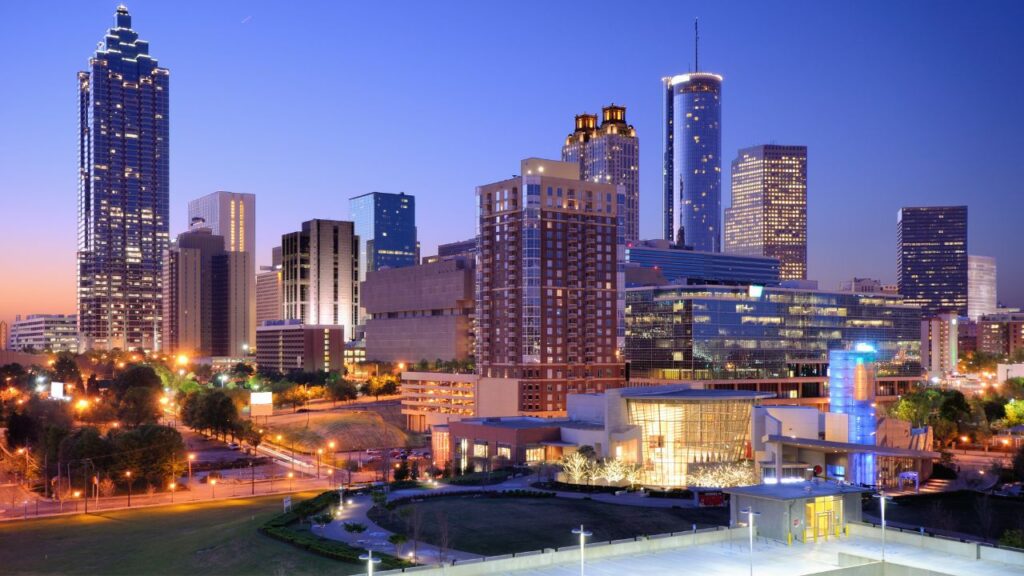
Atlanta is changing faster than most home searches reflect. Neighborhoods that looked like long shots five years ago are drawing serious buyer interest today — not because of hype, but because of infrastructure. These seven projects explain why.
What Is Centennial Yards and Why Does It Matter for Downtown Atlanta?
Centennial Yards is the redevelopment of The Gulch — a stretch of old rail yards and parking lots that sat below street level in downtown Atlanta for decades. For years, it was the most visible gap in the city’s urban fabric. Now, developers are building platforms over the rail yards and bringing the site up to street level, creating roughly a dozen new city blocks connected to the rest of downtown.
The project is already delivering real results. Hotel Phoenix opened across from Mercedes-Benz Stadium in late 2025. Cosm Atlanta — a 70,000 square foot entertainment venue anchored by a massive LED dome — is opening its doors this month. The full buildout, expected to continue through the end of the decade, is planned to include thousands of residences, over a thousand hotel rooms, retail, restaurants, and a Live Nation music venue.
For buyers, the ripple effect matters as much as the project itself. Entertainment venues fill nearby restaurants, generate foot traffic, and make surrounding neighborhoods more desirable over time. That’s a big part of why Castleberry Hill and South Downtown are drawing more attention than they were a few years ago.
How Is the Atlanta Beltline Still Growing — and What Does the Southside Trail Mean?
The Atlanta Beltline is already one of the most consequential infrastructure projects in the city’s modern history. It connects 45 neighborhoods with trails, parks, and planned transit, and it has fundamentally reshaped where buyers want to live. Old Fourth Ward, Inman Park, and Ponce City Market all look dramatically different than they did a decade ago — and the Beltline is a central reason why.
The big news in 2025 is the Southside Trail. For years, the Beltline had a gap between the Eastside and Westside. This year, new Southside Trail segments opened, creating a continuous connection for the first time. The remaining sections are expected to be complete by the end of the summer, with the full loop still targeted for around 2030.
The financial scale of this project is hard to overstate. A study released this past spring found the Beltline has attracted more than $14 billion in private investment since it began — with over $5 billion of that arriving in 2025 alone. When demand grows faster than available housing, prices follow. Neighborhoods along the Beltline have been proof of that dynamic for years.
What Is The Stitch Project in Atlanta?
The Stitch is a proposed platform over approximately three-quarters of a mile of the Downtown Connector — the stretch of I-75 and I-85 that has effectively acted as a wall between Midtown, downtown, Vine City, and English Avenue for decades. The plan calls for roughly 17 acres of parks and public space built on top of the highway, allowing people to move freely between those neighborhoods for the first time.
Mayor Dickens called it a once-in-a-generation project, and the funding history reflects how much was riding on it. The project secured a major federal grant, which was pulled back in 2025 after federal budget changes. Even so, work has continued. Atlanta Downtown Stitch Incorporated has secured additional funding, a special services district was approved, and the goal is to have the project shovel-ready with permits in place by mid-2025.
Phase 1 is still targeting a groundbreaking in 2027, with potential completion around 2030 if replacement funding comes together. For buyers considering neighborhoods on either side of the connector — especially the west side of Midtown and English Avenue — this is a project worth monitoring closely.
What Happened to the Microsoft Campus in Atlanta? What’s the New Plan?
In 2021, Microsoft purchased roughly 90 acres at Prairie Yards in Grove Park on Atlanta’s west side, with plans for a major employment center. Those plans were put on indefinite hold in 2023. In late 2025, Microsoft announced it would donate approximately 20 acres of the site to the city of Atlanta through the Atlanta Urban Development Corporation. The transfer is expected to complete this summer.
The land sits next to the Bankhead MARTA station. Plans call for new housing and commercial space designed to serve the surrounding community. Construction is likely still several years away — a development partner still needs to be selected, some plans require approval, and permitting hasn’t moved forward yet. A realistic construction start would be around 2028.
The context matters here. Grove Park and the broader west side have already been attracting more investment. The West Side Beltline Trail is nearby. Development activity has picked up. The Microsoft campus isn’t happening as originally imagined, but this land is still moving toward a major redevelopment — and buyers who understand that distinction are in a much better position to evaluate the opportunity.
What Is Midtown Green in Atlanta?
For years, a four-acre site at 14th Street between Peachtree and West Peachtree was simply a hole in the ground. The original plan — Opus Place, a 50+ story residential tower promoted as one of the tallest in the Southeast — never materialized. The lender foreclosed on the property in 2023.
The Midtown Improvement District acquired the site and is now developing Midtown Green, a permanent public park designed by the same firm that created New York’s High Line. Plans include a pavilion, an outdoor amphitheater for up to 800 people, restaurant and café space, and open areas for community events. A temporary version of the park is set to open this summer.
For a neighborhood as dense as Midtown — offices, apartments, retail stacked on top of each other — a public green space of this scale is genuinely meaningful. Parks like this become part of a neighborhood’s identity, and over time, that identity becomes part of why people want to live nearby.
How Does Hartsfield-Jackson Airport Affect Atlanta Home Values?
Hartsfield-Jackson has been the world’s busiest airport by passenger traffic since the late 1990s. In 2024 alone, it handled more than 108 million passengers and offered nonstop service to more than 245 destinations. It’s also one of the largest economic engines in the state.
The airport is currently mid-way through a major expansion called ATL Next, which received additional funding approval earlier this year. The biggest single project is widening Concourse D — construction happens overnight to keep flights running — along with a North Terminal expansion and broad facility updates. Projects of this scale generate construction jobs, vendor contracts, and logistics work. Communities like East Point, College Park, and South Fulton often benefit from the proximity.
The longer-term impact is even more significant. Companies requiring direct global access continue choosing Atlanta because of this airport, and those companies bring jobs. Jobs bring people. People need places to live. That dynamic is one of the underlying reasons Atlanta’s housing demand has remained durable across different market cycles.
What’s Happening with Midtown Atlanta’s High-Rise Construction?
Midtown is in the middle of the biggest high-rise building boom it has seen in more than 30 years. The headline project is Alena at 1072 West Peachtree — a 60-story tower developed by the Rockefeller Group that includes luxury residences, office space, retail, and one of the largest outdoor amenity decks in Midtown. It topped out in late 2025 and is set to welcome residents this summer.
That’s just one building. A 32-story tower near Piedmont Park delivered last year. Two towers on Juniper Street with nearly 500 units combined also started delivering last year. Additional projects remain in the pipeline.
The pricing effect of this supply wave may be counterintuitive. More options mean buyers can take more time. Developers compete harder for those buyers. Sellers have to price realistically. The result has been steady appreciation rather than sharp price spikes — which is actually a healthier long-term dynamic for a neighborhood. Over time, more residents mean more restaurants, more retail, more transit ridership, and more reasons for continued investment.
🎥 Watch the Full Video
Valerie breaks down all seven projects on location, with specific context on which neighborhoods are most directly affected and what this means for buyers in the market right now.
Frequently Asked Questions
Q: What is Centennial Yards in Atlanta?
A: Centennial Yards is a major mixed-use development being built over the old rail yards known as The Gulch in downtown Atlanta. When complete, it will add approximately 12 new city blocks with residences, hotels, retail, restaurants, and entertainment venues including a Live Nation music venue next to Mercedes-Benz Stadium.
Q: Is the Atlanta Beltline Southside Trail open yet?
A: Yes. New Southside Trail segments opened in early 2025, creating the first continuous east-to-west connection in the Beltline system. The remaining sections are expected to be complete by summer 2025. The full loop is still projected around 2030.
Q: What happened to the Microsoft Atlanta campus?
A: Microsoft purchased about 90 acres in Grove Park in 2021 for a corporate campus, but those plans were indefinitely paused in 2023. In late 2025, Microsoft announced it would donate approximately 20 acres to the city for housing and community-focused commercial development near Bankhead MARTA. Construction is expected to begin around 2028.
Q: How does The Stitch project affect Atlanta neighborhoods?
A: The Stitch proposes building a platform over three-quarters of a mile of I-75/85 through downtown, creating 17 acres of public park space and reconnecting Midtown, downtown, Vine City, and English Avenue. Phase 1 targets a 2027 groundbreaking, with completion around 2030 if funding comes together.
Q: What is Midtown Green in Atlanta?
A: Midtown Green is a planned permanent public park on a four-acre site at 14th Street between Peachtree and West Peachtree, where a stalled 50-story residential tower was once proposed. The park is being designed by the firm that created the High Line in New York and will include an amphitheater, pavilion, and café space.
Q: Is Midtown Atlanta a good place to buy right now?
A: Midtown is experiencing its largest high-rise construction boom in over 30 years, which has kept price growth steady rather than producing sharp spikes. Buyers currently have more inventory and more negotiating room than in recent years, while long-term fundamentals — proximity to the Beltline, MARTA, Midtown Green, and major employment centers — remain strong.
Q: How does Hartsfield-Jackson Airport impact Atlanta real estate?
A: As the world’s busiest airport, Hartsfield-Jackson is a major driver of Atlanta’s long-term job growth. Companies that need global connectivity choose Atlanta specifically because of the airport, and those jobs sustain housing demand across the metro. Communities closest to the airport — East Point, College Park, South Fulton — often see direct employment benefits from expansion projects.
Q: Which Atlanta neighborhoods benefit most from the Beltline?
A: Old Fourth Ward, Inman Park, Ponce City Market, and Ponce Highland have been the strongest beneficiaries of the Eastside Trail. With the Southside Trail now connecting east and west, neighborhoods like Reynoldstown, Ormewood Park, Capitol View, and portions of the West Side are increasingly in focus for buyers tracking where the next wave of Beltline-driven investment is heading.
Ready to Explore Atlanta’s Changing Neighborhoods?
Seven projects. One decade. Atlanta’s map is being redrawn in real time, and the buyers who understand which neighborhoods sit next to this kind of infrastructure are better positioned to make smart decisions.