Why Atlanta Home Sellers Regret Leaving Intown Neighborhoods
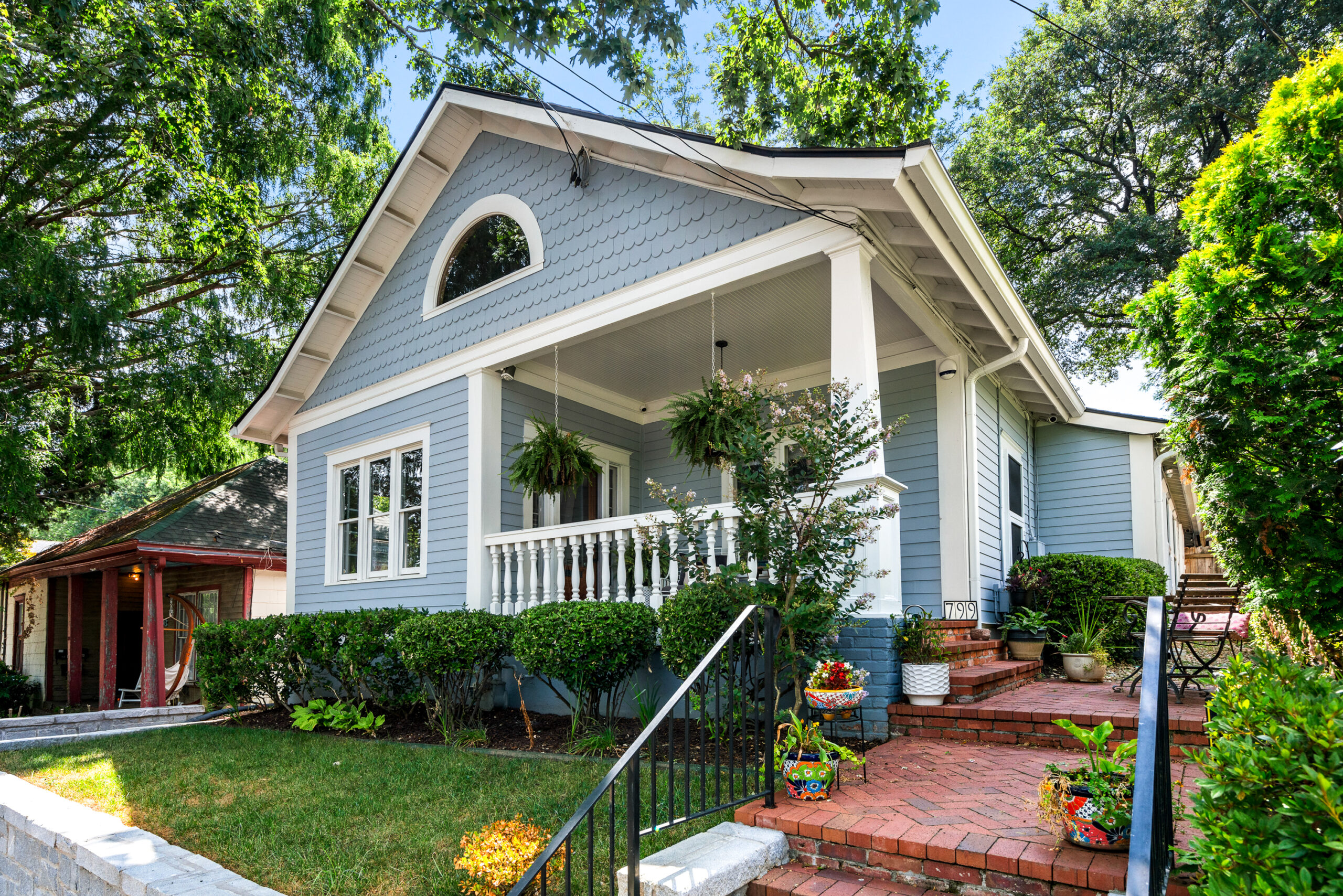
Why Atlanta Home Sellers Regret Leaving Intown Neighborhoods
Atlanta home prices are up nearly 60% since 2019, and the sellers who left their intown homes expecting a correction are still waiting. After 28 years in this market, Valerie Gonzalez has seen seller regret show up in seven consistent patterns — and almost none of them are purely financial.
What Do You Actually Lose When You Sell an Intown Atlanta Home?
The short answer: more than you priced in. Most sellers focus on equity captured and square footage gained. What they underestimate is the compounding value of location, community, and access that only exists in a specific geography — and can’t be recreated elsewhere in the metro at any price.
Here’s how that regret shows up across seven intown Atlanta neighborhoods.
Community: Why Oakhurst Sellers Miss More Than a Zip Code
Oakhurst, situated in the southwest corner of the city of Decatur roughly six miles east of downtown Atlanta, is a nationally recognized gold-level walk-friendly community — one of the highest designations given by the Walk Friendly Communities Program. The city also holds a silver bicycle-friendly designation.
Those labels aren’t marketing language. They describe a physical reality: short blocks, continuous sidewalks, a walkable village core at Eastlake Drive and Oakview Road, and enough residential density that neighbors are actually near each other. McCoy Park’s nine acres include a pool, baseball fields, a skate park, basketball courts, and a fitness zone. The recreation center runs sports leagues and cultural programming. The Oakhurst Neighborhood Association holds open monthly meetings.
What that infrastructure creates is a community that happens without scheduling. Kids move between houses because the streets are quiet enough and close enough. Adults run into each other at the park, in the village, at the neighborhood meeting — without a calendar invite. When a seller trades Oakhurst for a larger house in a newer suburb, they usually gain space and quiet. They lose the version of community that only exists at that kind of street scale.
Market Timing: What the Buckhead Data Actually Shows
The most common version of seller regret sounds like this: “I sold at the top.” The assumption inside that sentence is that selling high is a smart exit — but that’s only true if there’s somewhere to land at a lower price.
In Buckhead, that lower entry point hasn’t arrived. Single-family homes now average around $1.8 million, up nearly 60% from roughly $1.1 million seven years ago — the seventh consecutive year of appreciation. Sales volume has dropped sharply: roughly 715 single-family homes sold last year, about half of the 2021 peak of 1,440 sales. But prices didn’t follow volume down.
The reason, according to Buckhead’s own market analysis, is the lock-in effect. Homeowners who secured sub-3% mortgages in 2020 and 2021 have little reason to trade that rate for one that’s now roughly double. Nationally, about 80% of outstanding U.S. mortgages carry rates below 6%. That dynamic freezes supply in a neighborhood where housing stock is already limited — and frozen supply in constrained geography keeps prices elevated even when transaction volume falls.
The broader Metro Atlanta market saw price growth essentially stall by late 2025, one of the softest stretches since the pandemic surge. Buckhead didn’t follow that pattern. Average single-family prices ticked up again last year. Condo and townhome prices rose 11.5% to roughly $573,000, driven partly by new luxury tower deliveries.
As the local market analysis puts it: you can build new subdivisions in Forsyth County. You cannot create more Buckhead. For someone who sold three years ago, re-entry now means a higher price on the same home and a higher rate on the new mortgage. There was no clean exit.
Emotional Attachment: The Inman Park Pattern
Inman Park — Atlanta’s first planned residential suburb and its first electric trolley neighborhood, developed in the late 1880s by civil engineer Joel Hurt — is the neighborhood where emotional seller regret shows up most visibly.
The roughly 300 Victorian homes in the historic core sit on generous lots beneath a tree canopy that took more than a century to grow. Historic district protections limit new supply to infill. What exists now is close to what has existed for more than 140 years. The 30307 zip code, which covers Inman Park and surrounding neighborhoods, showed a median in the high $700s as of March this year.
The Inman Park Festival and Tour of Homes — Atlanta’s largest all-volunteer festival — returned this year for its 54th consecutive edition on the last full weekend of April. When something returns to the same streets for 54 years, it becomes part of a resident’s annual life. Sellers who move away stop being part of it, and that loss tends to arrive quietly, on a random evening when they’re checking Zillow alerts for an address that isn’t theirs anymore.
Location Access: What Jefferson Park Sellers Gave Up
Jefferson Park is a historic neighborhood of about 1,100 homes developed in the late 1920s, just southwest of Atlanta’s city limits in East Point. The Jefferson Park Neighborhood Association describes the daily access plainly: residents are less than 10 minutes from downtown Atlanta, about four miles from Hartsfield-Jackson International Airport, and have direct rail service to the terminal through East Point Station on MARTA’s Red and Gold Lines.
Within a 10-minute drive: I-85, I-75, I-285, and Route 166. That specific convergence of rail access, interstate proximity, and airport adjacency is tied to the southwest side’s geography. It cannot be recreated at a comparable price point anywhere else in the metro area.
A seller who left Jefferson Park for more square footage may still be losing the commute they had. The airport that was a MARTA stop away is now 45 minutes with traffic. Downtown, which once had three interstates within 10 minutes, now requires navigating I-20 westbound on a Tuesday morning. None of that shows up on the listing sheet.
Beltline Access: The Reynoldstown Appreciation Case
Reynoldstown is a National Register of Historic Places district on Atlanta’s east side, running from Pearl Street to Moreland Avenue. For residents, the Atlanta Beltline wasn’t an amenity — it was the answer to a simple question: what do you want to do tonight?
The 22-mile multi-use trail loop connects 45 intown neighborhoods. The east side trail runs roughly 3.5 miles with walk-up access to Krog Street Market, Ponce City Market, Historic Fourth Ward Park, and Piedmont Park. The southeast trail was confirmed fully open in spring 2026, extending the connection through Reynoldstown into Glenwood Park, Ormwood Park, and Grant Park.
The Beltline’s broader investment report cites $23 billion in yearly economic impact and over 90,000 jobs supported across the corridor. That scale of investment has real weight in the market — and when sellers leave Beltline-adjacent neighborhoods, they’re exiting a proximity premium that has proven measurable.
Appreciation: The Virginia Highland Math
Virginia Highland — no S — is the neighborhood where appreciation regret builds slowest and cuts deepest. The homes here average over 90 years old: craftsman bungalows, four squares, and Victorians that the market has been trying to price out of reach for decades without success, because the architecture, street scale, and community density can’t be reproduced anywhere newer in Atlanta at a comparable price.
Current listings in the neighborhood range from the high $700s to well past the million-dollar mark. A seller who held a Virginia Highland property through this cycle is looking at gains well into the six figures — not from one well-timed sale, but from patient ownership in a neighborhood that keeps rewarding it.
The fifth annual Virginia Highland PorchFest in May 2025 brought more than 40,000 people and over 100 musicians performing across 50+ porches. The event raised over $75,000 for the Virginia Highland District Association in a single day. The sixth annual event became ticketed with capped attendance because demand exceeded the free version’s capacity. Neighbors get in free.
When a seller leaves Virginia Highland, they’re not just selling a home. They’re selling their position in a market that keeps attracting the buyers who want exactly what they had.
🎥 Watch the Full Video
Valerie Gonzalez breaks down all seven reasons — with neighborhood-level data, specific street references, and the financial math behind each one — in this week’s Your Real Atlanta video.
Frequently Asked Questions
Why do intown Atlanta home sellers regret selling?
The most common reasons involve a combination of financial miscalculation and lifestyle loss. Sellers who expected prices to correct found that intown neighborhoods — particularly Buckhead, Virginia Highland, and Inman Park — continued appreciating. At the same time, they lost access to walkable communities, transit, the Beltline trail, and neighborhood culture that doesn’t exist at comparable prices elsewhere in the metro.
Have intown Atlanta home prices dropped since 2022?
No — not in core intown neighborhoods. While broader Metro Atlanta saw price growth stall by late 2025, neighborhoods like Buckhead saw average single-family prices tick upward again. The lock-in effect (homeowners holding sub-3% mortgages) has frozen supply in already constrained areas, keeping prices elevated even as transaction volume fell roughly 50% from peak.
What is the lock-in effect in Atlanta real estate?
The lock-in effect describes homeowners choosing not to sell because trading their existing low-rate mortgage (often below 3%) for a new one at current rates (near double) would significantly increase their monthly payment — even for a comparable home. Nationally, about 80% of outstanding mortgages carry rates below 6%, reducing seller motivation and suppressing supply.
How much have Beltline-adjacent homes appreciated in Atlanta?
According to Atlanta Beltline Inc.’s 2024 Housing Achievements Report, enrolled homeowners gained nearly $50,000 in average home value appreciation. Peer-reviewed research has also found that homes within a half mile of the Beltline appreciated meaningfully more than comparable homes elsewhere in Atlanta during the study period.
What makes Inman Park unique in the Atlanta real estate market?
Inman Park is Atlanta’s first planned residential suburb, developed in the late 1880s. Its roughly 300 Victorian homes in the historic core sit on large lots with a mature tree canopy that took more than a century to grow. Historic district protections prevent significant new supply, meaning what exists today is close to what has existed for 140+ years. That supply constraint, combined with walkability and Beltline access, supports continued price appreciation.
Is Buckhead a good investment in 2025?
Buckhead’s single-family market has appreciated for seven consecutive years, with average prices now around $1.8 million. The condo and townhome segment rose 11.5% last year to roughly $573,000. Low supply (driven by the lock-in effect), constrained geography, and continued demand from high-income buyers have kept prices elevated despite a significant drop in transaction volume.
What neighborhoods have the best walkability in intown Atlanta?
Oakhurst in Decatur holds a gold-level Walk Friendly Communities designation, one of the highest given nationally. West Midtown, Virginia Highland, Inman Park, and Reynoldstown all offer strong pedestrian access to commercial corridors, parks, and the Atlanta Beltline trail network.
What is the Atlanta Beltline and how does it affect home values?
The Atlanta Beltline is a 22-mile loop of multi-use trails, parks, and planned transit connecting 45 intown neighborhoods. The east side trail is complete at roughly 3.5 miles; the southeast trail opened fully in spring 2026. The Beltline supports $23 billion in yearly economic impact and over 90,000 jobs. Proximity to the trail has been associated with measurably higher home appreciation compared to similar Atlanta properties.
Ready to Understand What Your Intown Home Is Worth?
If you’re sitting on an intown Atlanta property and weighing whether now is the right time to sell, the decision deserves more than a Zestimate. There’s a financial case for staying that rarely shows up in a listing presentation — and it’s worth understanding before you move.
→ Search active listings in intown Atlanta
→ Talk to Vesta Consulting Group